
Tujia

Chengdu · City guide

Chengdu travel guide for first-time visitors.

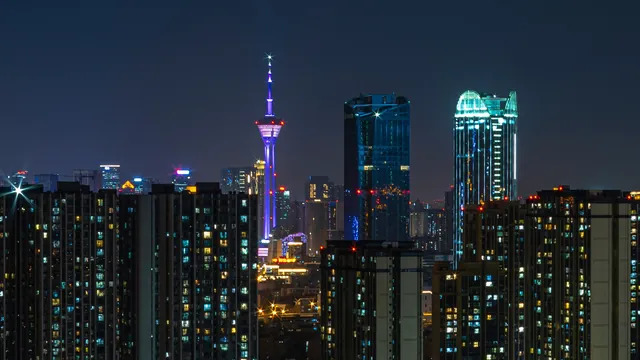
A 339-metre spire rises above Mengzhuiwan on Chengdu’s east side. Look up from the Jin River promenade and you’ll see why locals call Tianfu Panda Tower simply “339.” Across town, an afternoon moves at a different pace: a pot of tea in a Kuanzhai courtyard, then a small bowl of noodles tossed in chili oil.

The violet-lit mast and flared observation deck of Tianfu Panda Tower rise above Chengdu apartment blocks beside two glass high-rises at night.Tianfu Panda Tower · Chengdu 339
First morningChengdu Panda Base
Day tripDujiangyan
Order to shareMapo tofu
Skyline landmarkTianfu Panda Tower

01 · Sights & Routes

Best things to do in Chengdu

Start with the pandas in Chenghua, then give Dujiangyan a day of its own. Back in central Chengdu, Wuhou Shrine tells the story of the Shu kingdom, and the Kuanzhai lanes are a good place to settle in for tea.

A giant panda sits among logs and chews a bamboo stem, with its body and paws in view.01
Wildlife

Chengdu Research Base of Giant Panda Breeding

At Chengdu’s panda conservation and breeding centre, bamboo-lined paths lead to enclosures for different age groups. Stop at one feeding area and watch how a panda strips a bamboo stem with its teeth and forepaws.

Plan it wellCheck the day’s viewing information when you arrive. Cubs can be out of view, so leave time to see the adult pandas too.
Check panda base admission ↗
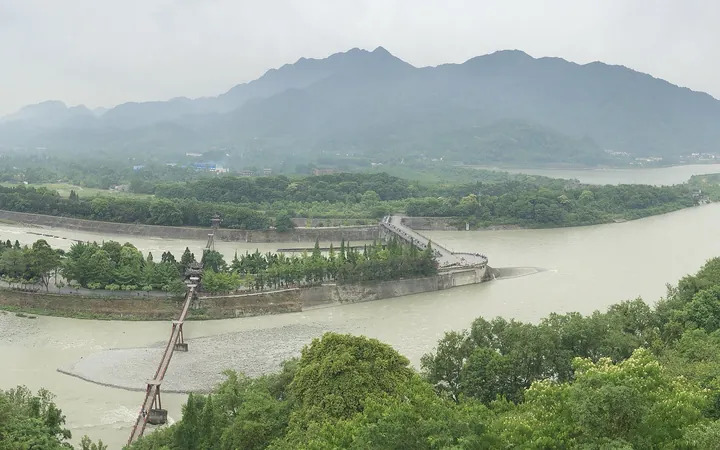
From above the Min River, the tree-lined Fish Mouth levee divides the flow into two distinct channels at Dujiangyan.02
World Heritage

Dujiangyan Irrigation System

At the Fish Mouth levee, watch the Min River split into two channels. Begun around 256 BC, the system still diverts water toward farms on the Chengdu Plain. Nearby Mount Qingcheng shares its UNESCO listing.

Plan it wellOn the site map, look for 鱼嘴 (Fish Mouth). Start at a high viewpoint to trace the divide, then walk down to the channels. The riverside steps can be slick after rain.
Explore the UNESCO World Heritage site ↗
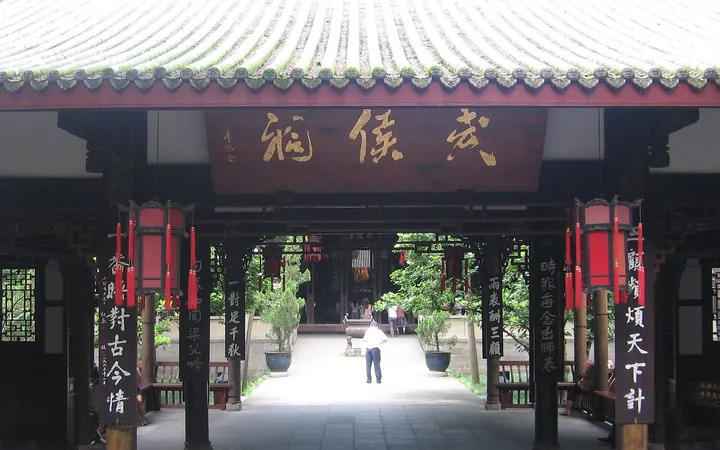
The tiled roof, gilded Wuhou Shrine plaque and lantern-hung columns frame the entrance to Zhuge Liang’s memorial hall.03
Three Kingdoms

Wuhou Shrine

Liu Bei, emperor of Shu, and his chancellor Zhuge Liang share this memorial complex. The figures in the halls put faces to Chengdu’s Three Kingdoms history. Behind them, a bamboo-shaded path winds between deep red walls.

Plan it wellVisit the museum halls first, then step into neighboring Jinli for a snack as the lanterns come on.
Explore the shrine and its grounds ↗
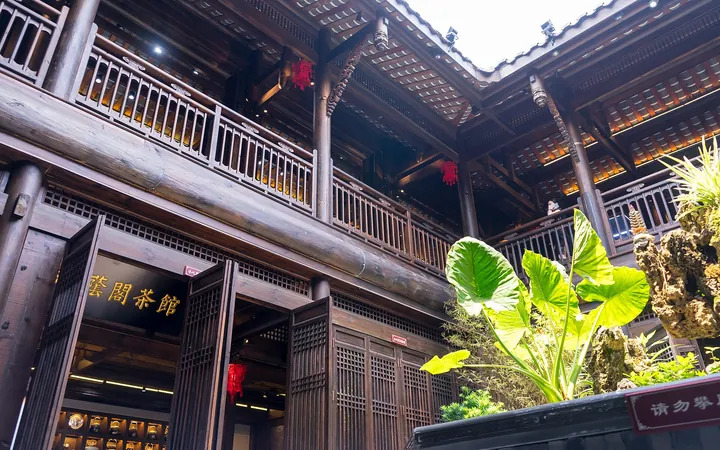
Sunlight catches broad green leaves in a Kuanzhai Alley courtyard framed by a two-storey timber teahouse and its upper gallery.04
Courtyard walk

Kuanzhai Alley

Kuan, Zhai and Jing are three parallel lanes lined with Qing-era courtyards. Step through a grey-brick gateway for a gaiwan of tea. Some teahouses stage bian lian, the Sichuan opera art of changing masks in the blink of an eye.

Plan it wellIf you want to see a mask-changing show, ask the teahouse for the next performance time and whether your seat includes tea.
Explore the three lanes (Chinese) ↗

Eat like a local

Three tastes of Sichuan

Order the fuqi feipian cold while the mapo tofu is still on the stove. Share both with rice. Save room for a small bowl of dandan noodles and stir up the dressing from the bottom.

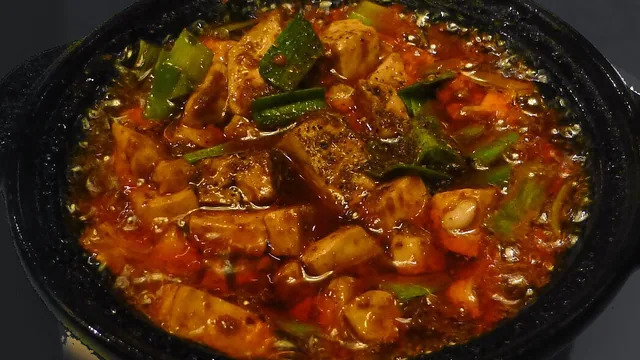
Tofu cubes and minced meat in glossy red chili oil, served in a black handled pot.01
Served hot

Mapo Tofu

Soft cubes of tofu hold their shape in a glossy red sauce of fermented broad-bean paste and browned minced beef. Ground Sichuan pepper adds a tingle after the first bite. Spoon some of the sauce over plain rice.

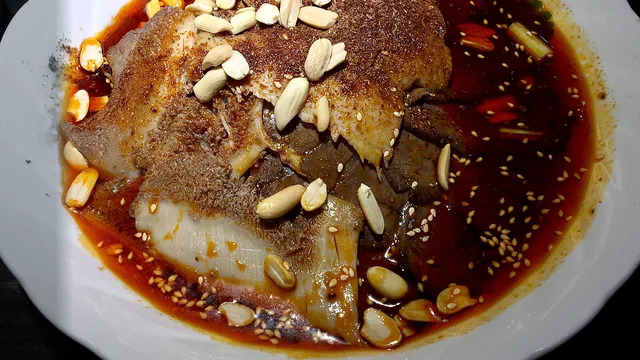
Cold slices of beef and offal with peanuts and sesame in a pool of deep red chili oil.02
Cold starter

Fuqi Feipian

Thin slices of braised beef and offal, often including honeycomb tripe or tongue, are tossed in fragrant chili oil. Sichuan pepper, sesame and crushed peanuts cling to the folds. Look for “sliced beef in chili sauce” on English menus.

A close-up of dandan noodles with browned minced meat and chopped scallions in a dark ceramic bowl.03
Street noodles

Dandan Noodles

This Chengdu street snack pairs wheat noodles with savory minced pork and finely chopped preserved mustard greens. Reach down with your chopsticks and turn the noodles through the chili dressing until every strand glistens.

For tea and a walk through the courtyards before breakfast, look for a stay near Kuanzhai Alley. Compare Chengdu neighborhoods and stays →

Climate & seasons

When to go & what to wear

Spring brings longer walks through the old lanes. July and August bring the heaviest rain, a good reason to keep a teahouse or museum nearby when planning an afternoon.

01

Mar–May

Walk the courtyard lanes before a lakeside tea break.

02

Jun–Sep

See the pandas early and leave a rainy afternoon free for tea.

03

Oct–Nov

Take the long way through Wuhou Shrine’s courtyards.

04

Dec–Feb

Warm up after a riverside walk with a bowl of mapo tofu and rice.

MonthsWeatherWear
Mar–MayDaily mean 12.0–21.1 °C (54–70 °F). Rain picks up from March to May.Carry a light layer for a morning in the panda base and a folding umbrella for the walk back.
Jun–SepDaily mean 21.6–25.4 °C (71–78 °F). July and August average about 30 °C (86 °F) by day and over 210 mm of rain each month.Choose quick-drying shoes with grip. A small waterproof pouch keeps your phone dry when ordering a ride in a downpour.
Oct–NovDaily mean 12.2–17.0 °C (54–63 °F). November typically gets about a third of October’s rainfall.Bring a sweater for a shaded tea table and a light jacket if you stay by the river after sunset.
Dec–FebDaily mean 5.5–8.0 °C (42–46 °F). January nights average around 3 °C (37 °F).Pack a warm jacket and thick socks. An extra layer helps when sitting still at an open-air teahouse.
Festival window: Around Lunar New Year, the Wuhou Shrine temple fair brings lanterns and performances to the shrine area and Jinli. Check the museum’s dates and entry arrangements before setting out.
Bottom line: Keep outdoor plans flexible in July and August. People’s Park and the Kuanzhai lanes are close enough to switch between a walk and a covered tea stop.

A little preparation goes a long way

Good to Know Before You Go

A booking detail, a tea lid and the right stretch of river make a difference on a first visit.

Which panda ticket should I book?

Choose the Chengdu Research Base of Giant Panda Breeding in Chenghua. Panda Valley in Dujiangyan is a different destination with its own admission. Save your booking details and bring the original passport or ID you used to reserve. Read the base’s ticket rules ↗

How do I drink from a gaiwan?

Leave the cup on its saucer. Tilt the lid just enough to hold the loose leaves back as you sip. When you would like more hot water, ask for “jiā shuǐ” (加水). Wait a moment after a fresh pour so the rim can cool. Read about Chengdu’s teahouses ↗

Where can I see Tianfu Panda Tower?

Follow the path beside the Jin River at Mengzhuiwan (猛追湾) until the 339-metre tower comes into view across the water. You can see the illuminated mast from the promenade. Confirm that the observation deck and revolving restaurant have reopened before planning a visit inside. Explore the Mengzhuiwan waterfront (Chinese) ↗

Beyond Chengdu

Where to Go Next

From Dujiangyan, continue to the Taoist temples on Mount Qingcheng. Other routes from Chengdu lead to the bronze masks of Guanghan, the cliffside Buddha at Leshan or the riverfront in Chongqing.

Mountain temples

Mount Qingcheng

Take the front-mountain route for temple courtyards and stone steps through the trees. If you want an unhurried climb, stay overnight near Dujiangyan and start the next morning.

Archaeology

Sanxingdui Museum

In neighboring Guanghan, look closely at the projecting eyes and ears of the bronze masks. Give the galleries a leisurely half day.

Cliffside sculpture

Leshan

Head south to see the Giant Buddha carved into a riverside cliff. The walking route brings you close to the carving, while the river gives a view of its full scale.

Next city

Chongqing

Follow Chengdu’s flat courtyard lanes with a few days on Chongqing’s steep stairways. The meeting of the Yangtze and Jialing rivers makes a good first evening walk.

Image credits and licenses

The photographs are cropped and resized for this guide. Credits link to original photographs and licenses where available. The Mapo Tofu photograph has color adjustments to the tabletop.